
What to Ask Before a Coronary Angiography Test in Kolkata
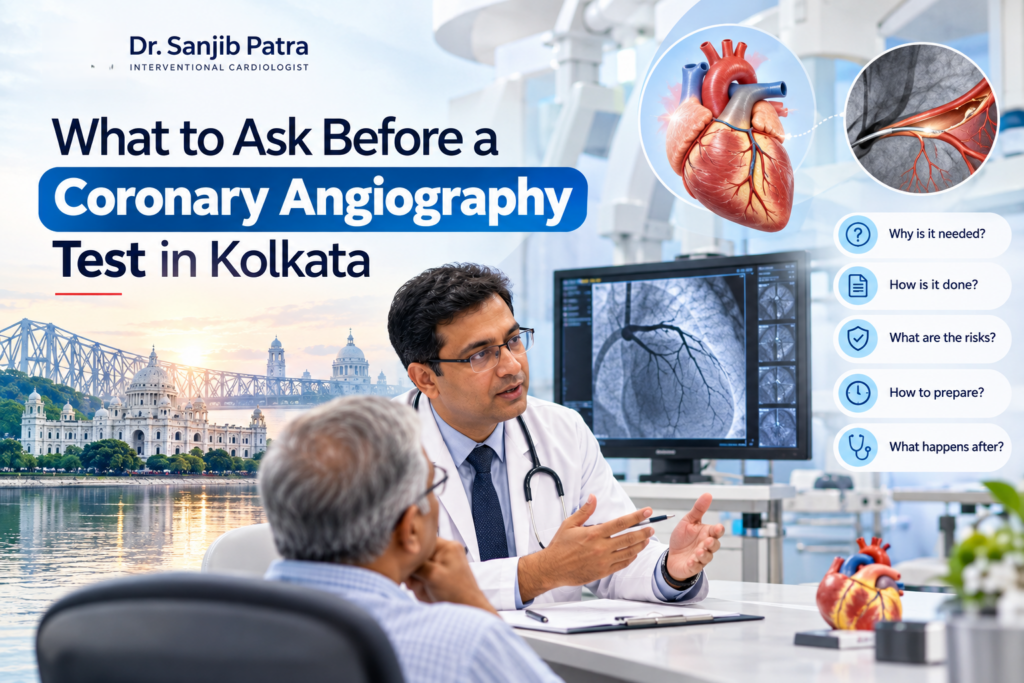
Coronary Angiography Test in Kolkata Your doctor just introduced you to angiography. All you can think about are the questions swirling around in your head. It’s only natural, with heart tests, to have mixed feelings. There’s nothing to be afraid of; however, a coronary angiography test in Kolkata is a routine and safe procedure! To feel at ease, it’s good to know what questions to ask professionals like Dr. Sanjib Patra. So before your test, prepare a list of questions and ask them in your consultation. Let’s take a look at the various areas it’s good to ask questions in: Understanding the Procedure It’s important to first gain a basic knowledge of what the procedure actually is. That being said, here are a few important questions to ask your cardiologist regarding the test: Why was I recommended for this test? How long will the procedure take? Will I be conscious throughout the procedure? What is the catheter insertion procedure like? Where exactly do you insert the catheter (wrist or groin)? You will enter the procedure room feeling ready and prepared, as opposed to nervous and uninformed. Understanding the procedure of coronary angioplasty and stents in Kolkata will also help you to prepare mentally as well. Asking about Possible Risks and Safety As with every medical procedure, there are some risks involved. Don’t be afraid to ask these next questions to your doctor: What are the possible risks and complications? What experience do you and your team have with this kind of test? What is the safety protocol of your hospital? How will you monitor my vitals during the test? Ask about the hospital’s experience as well, as this can have a major impact on your well-being during and after the procedure. Always feel free to ask about the infrastructure of the hospital and their success rate with the cath lab. Preparations Before the Test Preparations before the test are just as important as the test itself. There are a few important questions to ask about your pre-testing procedures: Do I have to stop taking any of my medications? Can I eat or drink anything before the test? Any blood tests I have to take? Do I need to bring someone with me to the hospital? How long is the fasting period? Be sure to mention all the meds you’re currently taking to the doctor. It’s very important to advise them of all blood-thinning medications related to the coronary angiography test in Kolkata you may be on. To discover a blockage, what happens next? Artery blockages are a common discovery and may lead to other medical procedures. It’s common for a patient to discover they need coronary angioplasty. In an effort to clear the blockage. This may be recommended to have an ad-hoc (or same-day) angioplasty and stent procedure. Here are a few questions you can ask regarding any additional procedures: Will you perform an angioplasty and stent procedure in the event of discovering a blockage? Will we have to discuss other options first? How many stents will I need? What type of stent do you recommend and why? What’s the difference between drug-eluting and bare metal stents? It’s always good to ask all your questions regarding any additional procedures in order to avoid unwanted surprises. Recovery Post-Procedure Recovery time depends on each patient and their unique medical needs. Understanding how your recovery may look is essential to preparing yourself mentally and physically. Here are a few questions regarding post-procedure care you can ask: How long will I have to stay in the hospital? When can I expect to return to work? What symptoms should I report immediately after the procedure? Additionally, you may want to ask about the aftercare instructions and what dietary changes you may have to make after the procedure. It’s also important to ask about how long you shouldn’t drive or restrict physical activity after a coronary angiography test in Kolkata. You can expect to leave the hospital the same day, but everyone’s recovery process is unique depending on their condition. Cost and Insurance Health care costs are often a sensitive subject. You want to make sure you understand what to expect financially when it comes to your coronary angiography in Kolkata. Here are a few questions you can ask regarding the financial and insurance-related aspects of the procedure: What is the estimated cost of the procedure? Is this procedure covered under my insurance? Are there additional costs for stents? What happens if complications arise and my hospital stay is extended? Since costs can vary from hospital to hospital, it’s always good to prepare yourself financially. Questions Regarding Future Heart Health As your future heart health is at stake, it’s always good to have the necessary information. Here are a few more questions to ask regarding your long-term heart health: What lifestyle changes do I have to make? Will I have to go on any medications? How often do I need to come for screening? What are the warning signs I should look out for? All these questions are essential in determining your long-term heart health. Schedule a Consultation Right Away Do not wait with your heart problems; take the first step towards better health. Schedule a consultation with Dr. Sanjib Patra for your own good. Be assured that he will provide you with all necessary information and guidelines regarding your case. Whether it is a simple diagnostic test or a more complicated coronary angiography test in Kolkata. Make your first confident step towards a healthier future and contact our specialists right away to schedule your appointment.
Traditional Vs Leadless Pacemakers: Which Option Fits You?
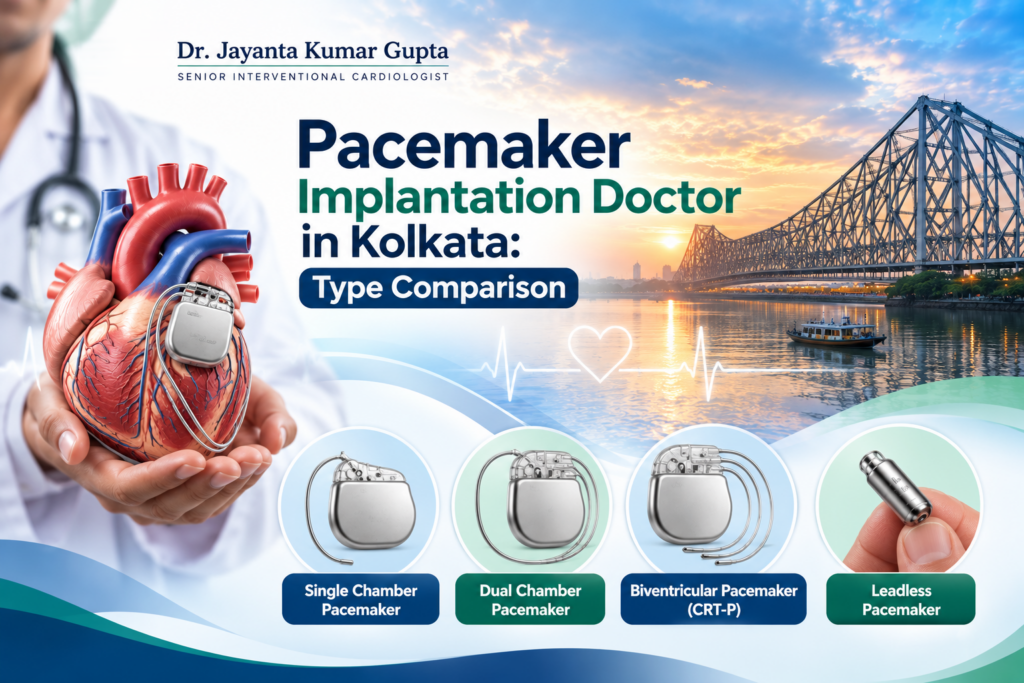
Pacemaker Implantation Doctor in Kolkata: Type Comparison Your heart skips a beat, and everything goes hazy after that. Has your doctor already prescribed a pacemaker for you? Do you still wonder which one is more suitable for your body, the new leadless or the traditional one? Do not fret, as this ultimate guide is here to help you. We will guide you step by step, and you will emerge well-informed about your options like a true professional. This way, you can discuss your options freely with the pacemaker implantation doctor in Kolkata. Professionals like Dr. Sanjib Patra will guide you all the way. What Is a Pacemaker, Actually? A pacemaker is basically a technological device. The main purpose of a pacemaker is to regulate abnormal heart rhythms. A cardiologist in Kolkata would implant it into your chest, thereby causing it to deliver electrical pulses. The electrical pulses, in turn, help your heart maintain an orderly beat. Therefore, the type of pacemaker that you get matters. To that end, let us take a look at your options. Traditional Pacemaker A pacemaker implantation doctor in Kolkata has been using traditional pacemakers for a while now. That is to say, it has been in use for a while. It requires a minor surgical procedure to get it inside your chest. Thereafter, a few leads are attached to the heart muscle. Below are some of the attributes of a traditional pacemaker. Proven, reliable, and tested technology Adjustable leads Chest wall incision required Infection risk is high due to the incision Multiple leads can be attached Long-term recovery is required The generator is replaced during generator revision surgery Most pacemaker doctors tend to favour this option as it is trusted and reliable. Moreover, it allows them to fix multiple cardiac problems simultaneously. Nevertheless, it comes with risks such as the possibility of the leads failing. Leadless Pacemaker The other option that you have is a leadless pacemaker. Now, you must be wondering how it differs from the standard, traditional one. Well, it may seem similar, but it does not require leads, as it is placed directly inside the heart. Here are the attributes of a leadless pacemaker: Leadless Small battery Capsule-type device Minimal incision Low infection rate Quick procedures No visible swelling around the incision site Less downtime Limited indications As you can see, this option offers numerous benefits. It also has some downsides, as explained below. Traditional Vs Leadless Pacemaker It is time to compare the two. When considering whether a traditional or leadless pacemaker is right for you, ensure you go through the points below. If you take good care of your health and go into surgery healthy, then you may have a lot to gain from a leadless pacemaker. On the other hand, the traditional one is advisable if you have complex needs. You should also consider the cost of the procedures and your lifestyle. The recovery time for the two is almost different. Traditional pacemakers take longer to recover from. Which Type of Pacemaker is Right For You? Now, which type would suit you? This is a question that you do not want to answer incorrectly. You have to understand that your options have certain features that suit various aspects of your lifestyle. For example, if you are young and healthy, you may lean towards a leadless pacemaker. On the other hand, if you are older and have complex underlying conditions, then a traditional pacemaker is a better choice. So it is not only a matter of preference. Rather, it is a question of what will suit you long-term. In a scenario like this, it is always advisable to consult a pacemaker implantation doctor in Kolkata for a detailed examination. So, who is a better judge of your condition, you or the doctor? Let the professionals deal with the situation to get you the accurate result that you deserve. Why Choose Our Cardiology Services? When considering your options, know that the choice is not easy to make. Therefore, it is always essential to seek expert advice at each point of the decision-making process. We offer the expertise and technology to make things easier for you. Below are some of the reasons why you ought to choose us: Advanced tools and equipment to facilitate easy diagnosis of your condition Professionals who are qualified to identify the root cause of your condition Personalised treatment depending on your needs and preferences Directional guidance to help you make better decisions regarding treatment Post-treatment supervision to ensure a fast and safe recovery Consult an Expert Today We have the know-how and technology at hand to get you sorted. So why wait? Book your appointment today with Dr. Sanjib Patra to begin your healing journey with a pacemaker implantation doctor in Kolkata! You won’t be disappointed.
Diet Changes That Support High Blood Pressure Treatment in Kolkata
High Blood Pressure Treatment in Kolkata Do you often feel tired, dizzy, or short of breath? If yes, then it might be possible that you have high blood pressure. In fact, it is a common condition affecting thousands of people in the city. So if you are looking for high blood pressure treatment in Kolkata, you should think about your diet. A healthy diet can help reduce your blood pressure naturally and also help the medicines that your doctor may prescribe for you. Now, professionals like Dr. Sanjib Patra explain how diet can help control high blood pressure. Importance of Diet to Control Blood Pressure A proper diet plays an important role in reducing high blood pressure. Salt consumption and oily food increase the workload of the heart and put pressure on the arteries. However, you can prevent this by making certain dietary changes. In addition to this, it will also improve your cardiac function and kidney health, and increase your overall energy levels. Hence, before recommending any blood pressure medicines, a cardiologist in Kolkata will ask you to make certain dietary changes. Effective Diet Changes To Control Blood Pressure To help lower your blood pressure, your diet must be rich in potassium, magnesium, fibre, omega-3, and protein and low in sodium, saturated fats, and cholesterol. Here are some changes that you can make to your diet: Reduce the amount of salt in your diet Eat foods that are rich in potassium Eat more fibrous foods Reduce the intake of junk food Limit alcohol consumption Foods to Be Taken While You Have High Blood Pressure There are certain foods that help improve your heart health. Here is a list of such foods that you can eat: Leafy vegetables: spinach, methi, etc. Fruits: papaya, oranges, banana, etc. Low-fat products: curd, milk, paneer, etc. Nuts and seeds: in moderation Fish: if you have a non-vegetarian diet Foods and Habits to Avoid There are certain foods and habits that you must avoid: Adding excess salt to your food Eating outside Skipping meals and then overeating Smoking and consumption of caffeine Role of a Cardiologist in Managing High Blood Pressure A professional doctor must advise your diet. They will go through your health reports carefully. In case of high blood pressure treatment in Kolkata, he/she may ask you to get some tests done to understand your condition and then advise you on a diet chart according to your condition. For instance, in case you have kidney problems, you will be asked to consume less potassium-rich foods. Hence, it is essential that you consult a professional doctor rather than taking any diet advised by a friend or relative. Simple And Easy Lifestyle Tips To Follow With Diet You can also follow certain lifestyle tips to get better results. Some of the effective lifestyle changes that you can make include: Go for a walk for at least 30 minutes daily Have at least 7-8 hours of sound sleep Meditate and do yoga regularly Monitor your blood pressure regularly Always Consult Your Doctor It is important that you take measures to bring your blood pressure under control. A controlled diet along with medicines and lifestyle changes can help you overcome high blood pressure. Hence, do not waste your time and consult an experienced cardiologist. Now, Dr. Sanjib Patra can provide you with high blood pressure treatment in Kolkata. So, book your appointment today!
What Should Families Carry When Rushing a Patient to a Heart Hospital?
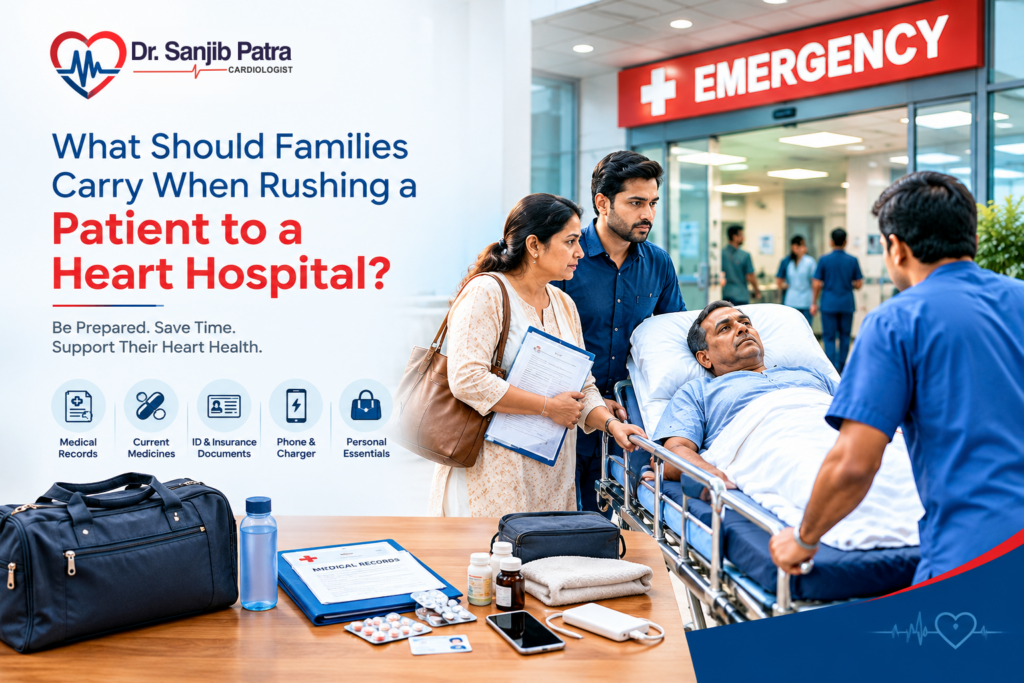
Heart Attack Treatment in Kolkata A heart attack rarely provides prior warning. One moment everything is fine, and suddenly the situation takes a turn for the worse. When a loved one is clutching their chest in agony, what should you grab before rushing off to the hospital? Time is of the utmost importance during this window. So it’s essential to know what to carry with you for heart attack treatment in Kolkata. This is why Dr. Sanjib Patra is here to guide you on the proper procedure. Why You Must Prepare Yourself for a Cardiac Emergency During heart failure treatment in Kolkata, the doctor may need specific information to help treat the patient. This is why knowing what to carry along with you when heading to the hospital can be the difference between life and death. In addition, being prepared ahead of time can also reduce stress and panic in the midst of a crisis. Instead of wandering through the hospital counter for paperwork, you’ll be able to devote all your mental energy to the patient. Remember, a few minutes’ worth of preparation can save precious hours in a crisis. Things to Carry Along When Going to the Hospital Here’s a list of things that you should consider bringing along with you when going for heart attack treatment in Kolkata: Aadhaar card or government-issued ID Insurance card and policy number Medical history (especially heart-related issues) List of medications and dosages Doctor’s contact information (in case the patient has a cardiologist) Emergency contact information of family members If you’re unable to gather all the documents above within a short span of time, it’s best to leave without them. Your life (and the patient’s) is more important than any piece of paper. Medical Supplies that Can Be Used for Heart Attack Patients If the patient has a pre-existing heart condition, here are some of the medical supplies that can prove to be quite handy: Heart-related medications (e.g., aspirin, nitroglycerin) Blood pressure readings (if the patient has had one recently) Blood sugar levels (if the patient is diabetic) Oxygen cylinder (if there is already one at home) Notes regarding allergies Lastly, be sure to note down the time at which the patient first experienced the symptoms. This can prove to be extremely useful for the doctor. Other Things to Bring Along with You at the Hospital You should also bring along the following things to the hospital: Cash/debit card (for payment) Mobile phone and charger Change of clothes Water bottle and snacks for family members Notebook (for taking notes from the doctor) These are just a few examples of things that you should bring along with you when going for heart attack treatment in Kolkata. In general, it’s best to prepare as much as you can so that you don’t end up stressing out when you get to the hospital. After all, nobody wants to spend extra time trying to find something when they’re already stressed out because of a cardiac emergency. Things to Avoid During a Cardiac Emergency When going to the hospital, it’s important not to waste time. Here are some things that you should avoid doing: Looking for insurance documents (if it’s inaccessible) Trying to change into clean clothes Trying to feed the patient food Waiting for someone else to come and pick up the patient Driving yourself instead of taking an ambulance Ultimately, the patient’s well-being should be prioritised above everything else. With that being said, there are certain things that you simply cannot do if you want to reach the hospital on time. Why Choose Dr. Sanjib Patra for Your Heart Treatment? Dr. Sanjib Patra understands how crucial it is for patients receiving heart attack treatment in Kolkata to receive immediate care. That’s why our emergency team is always on standby for emergency calls. In addition, our cath lab is always open and ready for any cardiac emergency that may arise at any given hour. Since time is of the utmost importance during cardiac emergencies, our expert doctors make sure that our patients receive heart treatment as soon as possible so that they can return to full health. Act Fast During Cardiac Emergencies Cardiac emergencies don’t wait for permission. If you suspect that a loved one is having either a heart attack or heart failure. Then, it’s best to immediately call for an ambulance service and get them to heart attack treatment in Kolkata. Professionals like Dr. Sanjib Patra are always available for you 24/7. So go ahead and save us as your go-to emergency contact whenever a cardiac emergency strikes!
Cardiac resynchronization therapy in Kolkata: CRT-P vs CRT-D
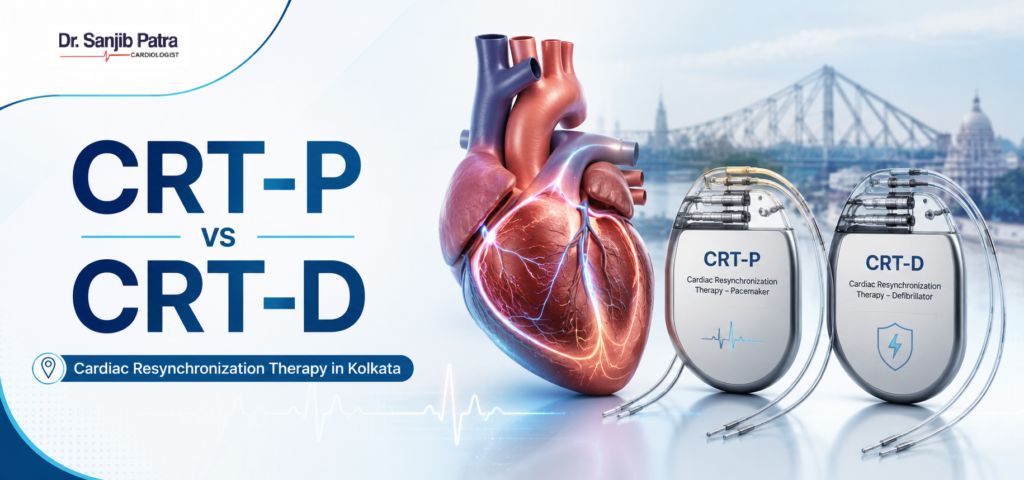
CRT-P or CRT-D: Which Device May Suit Your Heart Condition? Do you ever get tired of doing simple things? Do you ever feel exhausted even when you’re sitting at ease? So, if that rings any bells and you’ve been diagnosed with heart failure. This may mean that the chambers of your heart are not working synchronously. But cardiac resynchronization therapy in Kolkata can help. However, Dr. Sanjib Patra recommends that you understand how “CRT P & CRT D” work for your condition. What Is Cardiac Resynchronization Therapy? Generally, cardiac resynchronization therapy in Kolkata, or CRT, is a modern intervention. This involves a minimally invasive procedure. To implant a device in your heart. After all, this function helps to improve your heart’s pumping. By enhancing the synchronization of its contracting muscles. Subsequently, this is a successful treatment option for individuals with heart failure. However, there are two main types of cardiac resynchronization devices: CRT-P (Pacemaker) CRT-D (Defibrillator) But what are their different functions? Understanding CRT-P (Pacemaker) A pacemaker works by delivering small impulses. To both of the lower chambers of your heart. This ensures that they beat in unison instead of out of sync. Also, the doctor may recommend a CRT-P if; Your symptoms are advanced or extreme You haven’t dealt with life-threatening irregular heartbeats A shock defibrillator doesn’t seem to suit you. Nevertheless, a pacemaker is for when you don’t need or lack defibrillator protection. But let’s look at other features that could support you in selecting the option for your condition. Understanding CRT-D (Defibrillator) Besides supporting heartbeats, an implantable cardioverter defibrillator in Kolkata sustains a consistent rhythm. In your heart and brain by delivering an electric shock to restart your heart. Then again, you may wonder whether a pacemaker offers such services. Contrarily, a pacemaker and implantable cardioverter in Kolkata offer multiple cardiac treatments. A cardiac resynchronization defibrillator may be advisable if; Have irregular heartbeat episodes for an extended period Signs are inconsistent with your rhythm Had a close cardiac arrest before Lastly, your left ventricular ejection fraction is significantly low. Therefore, a defibrillator can be the solution to numerous heart conditions. But what are the similarities and differences concerning a CRT-P and a CRT-D? CRT-P VS CRT-D Comparison Choosing between these devices depends on your specific condition. Here’s a simple comparison: Feature CRT-P CRT-D Improves heart rhythm sync Yes Yes Delivers shock therapy No Yes Suitable for low arrhythmia risk Yes Also suitable Suitable for high arrhythmia risk Not ideal Yes Battery life Longer Shorter Cost Lower Higher As you can see, CRT-D offers more protection. But it also costs more and needs more frequent battery changes. The Doctor’s Diagnosis for Deciding Which CRT You Need Firstly, your cardiologist will analyze your medical history. Then recommend either of the procedures. For example, the ejection fraction from one or both sides of your heart. And personal history may advise the need for a CRT-D or CRT-P. Secondly, the expert will determine whether you have had several cardiac arrests. This is more likely to indicate a higher need for a defibrillator. Lastly, personal preference concerning the risks involved. Lifestyle is another vital factor in the condition. Thus, a well-rounded approach is fundamental in cases of cardiac resynchronization therapy. The Reasons Behind Selecting Expert Doctors for CRT Support When dealing with heart conditions, you have to choose your medical practitioner carefully. It’s not sufficient to select an excellent doctor for cardiac resynchronization therapy. Instead, it is critical to pick a reputable and trustworthy physician. And a reliable institution to support a long-term and wholesome recovery period. With the facilities and equipment available for treating cardiac resynchronization therapy in Kolkata. You are in an extraordinary position to receive the best treatment. Therefore, an early diagnosis like CRT-P and CRT-D can improve your life. The Ultimate Cardiac Care You Wish To Receive A quick analysis of your medical record by professionals indicates improvement. This is for those people suffering from cardiac conditions. But remember that early diagnosis and professional treatment can save lives. So, the next day can bring an improved heart condition with a visit to the doctor. To obtain ultimate cardiac care and help treat your heart condition. Take the first step toward improvement now. Whether you wish for a pacemaker or cardiac resynchronization therapy in Kolkata. You will obtain the support and assistance of the best professionals. Some of them, like Dr. Sanjib Patra, are available round the clock.
Pacemaker implantation doctor in Kolkata: Common Questions

Questions to Ask a Heart Specialist About Pacemaker Implantation Has your doctor suggested a pacemaker, and now you are panicking? Pacemakers may be small in size, but they have the capability to do big things to regulate the heart’s function. Thus, it is essential to ask the right questions. Professionals like Dr. Sanjib Patra believe that every informed patient is a healthy patient. Hence, if you are searching for a pacemaker implantation doctor in Kolkata, this ultimate guide will help you prepare for the consultation with confidence. Why Asking the Right Questions Is Important A pacemaker implant is not a small procedure; it will impact your quality of life. As such, if you fail to prepare, you may feel lost and frustrated. In addition, a cardiologist in Kolkata will always encourage you to ask questions, as it enables you to heal better. Most experts even agree that the more questions you ask, the faster you recover. Now, let’s dive into the list of questions to ask a pacemaker doctor in Kolkata. Questions Before Implant Surgery Before you think about what to ask the doctor about a pacemaker, it is critical to understand your condition. Therefore, your first set of questions should be directed towards understanding your diagnosis. Therefore, start with the following questions: Why do I need a pacemaker? What condition is being treated (arrhythmia, bradycardia, heart block)? Are there non-surgical options for my condition? What are the risks of postponing or avoiding the surgery? Make sure to ask the pacemaker implantation doctor in Kolkata to explain things in simple terms. Questions About the Treatment Itself At this point, you have a good understanding of your diagnosis and what brought you to this point. Now you want to understand how to address it. Hence, the next set of questions should be related to the procedure itself that will see you fitted with a pacemaker. Ask the following questions: ● How long does the surgery take? ● Will I be awake during the procedure? ● What type of pacemaker do I need? ● How many surgeries have you handled? ● What are the odds of experiencing complications for someone with my diagnosis? It is also essential to ask the doctor about their experience with similar procedures. Questions About Aftercare and Lifestyle The aftercare process following the implant surgery is as critical as the surgery itself. Therefore, in order to make a smooth recovery, you need to understand what you should and should not do post-surgery. Hence, ask the doctor the following questions: ● How long will I be in the hospital? ● When will I be able to get back to work, exercise, or drive? ● Will I need to make any lifestyle changes? ● Can I fly an airplane with a pacemaker? ● How do I care for the incision site? Make sure to ask the pacemaker implantation doctor in Kolkata what warning signs to look out for after the surgery. Questions About Device Maintenance A pacemaker is a device that requires regular maintenance for it to perform optimally. Therefore, it is vital to learn more about maintenance schedules and other concerns about the care of the device. Ask the following questions: ● How often do I need to go for checkups? ● Do I need to replace the generator and, if so, how often? ● Can electronics interfere with the pacemaker? ● What information should I give to other medical professionals? Once you have the answers to all these questions, you will feel much more empowered about the implant surgery. Questions About Costs and Insurance Most people do not like talking about money, but it is always advisable to have a clear understanding of the expenses involved with the implant surgery. Ask the following questions: ● What is the cost of the procedure? ● Does my insurance plan cover the procedure? ● Are there various options in terms of the device and the pacemaker generators? ● Are there any additional costs that I should be aware of? Asking all these questions will enable you to know the financial implications entailed in getting a pacemaker. Choosing a Pacemaker Implantation Doctor in Kolkata In case of selecting a suitable heart expert to assist you throughout the implantation process, you may get overwhelmed because of the number of choices. Nonetheless, it is important to know that not all cardiologists are comparable. That is why we suggest you follow the following guidelines when looking for a pacemaker surgeon: ● Board-certified cardiologist specialized in implant surgery ● A doctor working in a decent hospital ● Good reviews from former patients ● Good communication skills ● Provision of aftercare services The clinics have a bunch of highly experienced cardiologists who perform pacemaker implantation, advanced cardiac monitoring, and much more. You Have the Right to Know Everything This ends the comprehensive guide to help you understand what questions you need to ask your pacemaker implantation doctor in Kolkata before you visit him/her. After this, you have to be careful to make sure that you take all the necessary measures to protect yourself. This is why Dr. Sanjib Patra strongly advises you to come for a consultation.
Learn The Real Cost Behind Heart Failure Treatment in Kolkata

How Much Does Heart Failure Treatment Cost in Kolkata? Heart failure treatment in Kolkata can vary from thousands of rupees for drugs to lakhs of rupees for surgeries, depending on the severity of the condition. In addition, this may cost substantially more if the patient needs surgery. Therefore, Dr. Sanjib Patra has developed this informative piece to help you understand everything about the costs. Cost Estimate: What You Can Expect to Pay Consultation and tests: ₹3,000-₹8,000 Treatment for mild to moderate failure: ₹2,000-₹6,000 per month Hospitalization: ₹40,000-₹1,50,000 Pacemaker: ₹1,50,000-₹3,50,000 Heart attack treatment with angioplasty: ₹1,50,000-₹3,00,000 Bypass surgery: ₹2,50,000-₹5,00,000 Heart transplant: ₹15,00,000-₹25,00,000 It should be noted that these are only approximate figures that have been estimated based on past cases. Moreover, heart attack treatment impacts the final cost. What Determines the Final Cost of Heart Failure Treatment? Duration of hospitalization: The longer you have to stay at the hospital, the higher the final cost will be Type of treatment: Stent surgery is much less expensive than bypass surgery, which in turn is cheaper than a heart transplant. Implant used: The brand of the implant or any other hardware used during the treatment influences the final cost. Doctor’s experience: Experienced doctors tend to charge higher fees Physiotherapy: The need for physiotherapy and related expenses should also be factored in It has to be kept in mind that the regular cost of medicines, consultations, and post-hospitalization expenses also add up significantly over time. Therefore, it is important to take all of these costs into account when considering a heart failure treatment in Kolkata. Are there any hospitals in Kolkata offering heart care packages? Can I compare different heart care packages online? Are there any nearby cardiac treatment centers that accept cash payments? Once you understand the available options, it will be much easier to make a choice. Make Sure You Are Making the Right Choice There is no doubt that early intervention plays a critical role in effectively managing heart failure. Kolkata has several renowned cardiac treatment centers that offer comprehensive care for patients suffering from heart failure. Therefore, it is critical to make an informed choice and schedule a consultation with the best heart hospital for early intervention. Know More About Cardiac Care Packages in Kolkata There is no question that heart failure treatment in Kolkata can be expensive. However, some packages can help you manage everything from consultations to hospitalization and post-discharge recovery. In fact, many cardiac care packages in Kolkata are designed to help you identify the best heart hospital in Kolkata for your specific needs. Furthermore, heart care packages in Kolkata also help you to understand the approximate cost of heart treatment. As such, they serve as an important tool when choosing the best heart hospital in Kolkata for your treatment. Know More About Costs of Cardiac Care Heart failure is a condition affecting thousands of people across Kolkata every year. Heart failure occurs when the heart is unable to pump a sufficient amount of blood due to a weak heart muscle. This can result in several uncomfortable symptoms, as well as severe conditions such as a heart attack. The earlier heart failure is treated, the lower the costs incurred. For instance, a simple diagnostic test costing only ₹5,000 can prevent you from future expensive procedures. This is particularly true for heart failure treatment in Kolkata, where prompt intervention can help you avoid extremely high costs. It is time that you schedule a consultation with a competent physician today. From Doubt to Determination: Know How One Family Handles Heart Failure X, a 62-year-old retired teacher from Behala, experienced several uncomfortable symptoms for quite some time and assumed it was simply due to her age. Her son wanted to get a specialist’s opinion regarding his mother’s condition. X and her family have been dealing with the frustration of a prolonged diagnostic process for weeks. She has been visiting several doctors in search of a satisfactory explanation for her condition. X has been diagnosed with heart failure and is now undergoing treatment to manage her symptoms. The treatment has cost only ₹50,000 for the first three months of hospitalization and is already showing encouraging results. Your Heart Wants You to Take Care of It. Are You Listening? Every year, thousands of people in Kolkata fail to recognize the warning signs of heart failure and suffer unnecessarily. As a result, they end up spending significantly higher amounts on heart failure treatment in Kolkata, especially if surgery becomes necessary. However, Dr. Sanjib Patra suggests that it is important to note that early intervention helps you stay in control of the situation.
High blood pressure treatment in Kolkata Govt or Private Hospital?

Government vs. Private Healthcare: Which Offers Better Blood Pressure Treatment? If your doctor just told you, “Your BP is high,” chances are that you are on the lookout for high blood pressure treatment in Kolkata from professionals like Dr. Sanjib Patra at this very moment. And one of the first questions that arises at this point is obvious: which is better – to visit a government hospital or a private one? Now, let’s take a deep dive into this. Why This Question Matters So Much Right Now The reality is that hypertension has been silently becoming one of the major medical conditions in the city. Long work schedules, consumption of salty foods, a stressful environment, and lack of exercise make for a combination. As a result, an increasing number of people look for a cardiologist. However, not everybody has access to the same type of care. This is precisely the reason why it is necessary to compare government and private healthcare facilities, as each has its own merits. What Government Hospitals Bring to the Table SSKM, NRS, and Calcutta Medical College are examples of government hospitals in Kolkata that provide treatment to hundreds of people each day. This is their asset and their burden at the same time. This is how these hospitals benefit: There is either no fee charged or it is very minimal Subsidized medicines are provided Doctors and specialists are available in these hospitals, especially in OPD There are always emergency services available But the other side of the story exists as well. The waiting period is quite long here. It is hard to arrange a follow-up appointment to treat high blood pressure. Due to the high volume of people, there are only a few minutes spent on each person by doctors, which is inconvenient when talking about chronic diseases like high BP. What Private Healthcare Offers Instead There are some differences between private and government hospitals/clinics. Due to a smaller number of patients that doctors have to examine per day, they have more time and can provide a more individual approach. Some clear advantages are: Shorter waiting lines and easier scheduling One-on-one time with the doctor Advanced technologies such as ECG, ECHO, and ambulatory blood pressure measurement at your disposal Ability to have an ongoing relationship with the same cardiologist from Kolkata It is important to understand that all these conveniences have a price tag. It is clearly more expensive to pay for consultations, examinations, and medications in comparison with government hospitals. For families with a chronic condition of hypertension, such costs will accumulate over the years. The Factor That Decides Everything for Most Families To put it bluntly, cost is always the determining factor in treating high blood pressure. Government treatment is almost free. This makes a huge difference when considering those living off of daily wages or having family members. Conversely, private treatment is quick and comfortable but entails continuous budget allocation. In simple terms, there is nothing like “the wrong choice” in this case. All that should be considered is what is realistically sustainable for a long period of time. Because high blood pressure is a chronic illness that requires constant attention. Doctor Availability and Access to a Cardiologist in Kolkata Here comes the twist. While government hospitals certainly provide great cardiologists, arranging appointments with the same doctor each time is tricky. The private centers, on the other hand, allow the patient to select and maintain the same cardiologist in Kolkata throughout the period. The case of BP patients is different, since continuity of treatment is crucial. It is not only important to prescribe a medication but also to monitor the changes within several months. Technology and Diagnostics: A Quiet but Important Difference Private hospitals have access to better diagnostic equipment. More importantly, this makes diagnosis quicker and treatment more accurate. Government hospitals are slowly improving their diagnostic facilities, particularly larger hospitals. However, availability will be different based on locations and even on different days. In simple BP check-ups, this might not make much difference. However, in complicated cases where the patient is resistant to treatment, even from a cardiologist. This can literally mean the difference between life and death. So, Which One Should You Actually Choose? There isn’t one correct answer here, and I’m being very honest about that. If the price factor is of utmost importance, then you always have government hospitals to fall back on as a reliable choice. But if you need speedy treatment and individualized care, and you can afford it, then private health care is the one for you. Likewise, many people in Kolkata resort to using both forms of health care at once, receiving medicines for free at government health clinics and visiting a private cardiologist in Kolkata regularly. Compare Both Before Your Treatment Overall, treating high blood pressure need not necessarily involve choosing one ‘side’ over the other. The role of government hospitals as well as private clinics cannot be undermined in the management of the disease. According to Dr. Sanjib Patra, the most crucial thing is to find an appropriate management strategy or combination that ensures consistency in your therapy.
Yoga and Heart Health: How Yoga Can Support a Healthy Heart

Introduction A healthy heart is essential for overall well-being, and maintaining cardiovascular health requires a combination of regular physical activity, a balanced diet, adequate sleep, and stress management. Among various forms of exercise, yoga has gained attention for its potential benefits for heart health. Combining gentle physical movements, breathing exercises, and relaxation techniques, yoga can be a useful part of a heart-healthy lifestyle. How Does Yoga Benefit Heart Health? Yoga can support cardiovascular health in several ways. Regular yoga practice may help improve blood circulation, promote relaxation, and support healthy blood pressure levels. Certain yoga poses also encourage gentle physical activity, which can contribute to better flexibility, balance, and overall fitness. One of the major advantages of yoga is its focus on controlled breathing. Breathing exercises, or pranayama, can encourage relaxation and help reduce the physical effects of stress. Since prolonged stress can contribute to increased heart rate and blood pressure, managing stress is an important aspect of maintaining heart health. Yoga and Blood Pressure High blood pressure is one of the important risk factors for cardiovascular disease. Along with medical treatment, lifestyle modifications can play an important role in managing blood pressure. Regular yoga and relaxation practices may help promote a calmer state of mind and support healthy blood pressure. However, yoga should not be considered a replacement for prescribed medication. People with hypertension should consult a healthcare professional before making changes to their treatment plan. Can Yoga Help Reduce Stress? Chronic stress can affect cardiovascular health by increasing heart rate, blood pressure, and levels of stress hormones. Yoga incorporates meditation, mindful breathing, and physical movement, which can help promote relaxation. Practising yoga regularly may help individuals develop better stress-management habits. Even a short daily session of gentle yoga, breathing exercises, or meditation may contribute to a healthier lifestyle when combined with other positive habits. Yoga for People With Heart Conditions People with existing heart conditions should approach exercise carefully. While certain forms of gentle yoga may be suitable, the appropriate intensity can vary depending on an individual’s cardiovascular condition, age, medications, and overall fitness. Before beginning a new exercise routine, people with heart disease should discuss it with their doctor. A best cardiologist in Kolkata can help assess cardiovascular health and provide appropriate guidance regarding physical activity. It is particularly important to avoid strenuous or advanced yoga poses without professional guidance if you have a known heart condition. Yoga should be adapted according to individual health requirements rather than followed as a one-size-fits-all routine. Making Yoga Part of a Heart-Healthy Lifestyle Yoga works best when combined with other healthy habits. A heart-friendly lifestyle should include a nutritious diet rich in vegetables, fruits, whole grains, and appropriate sources of protein. Regular walking or other cardiovascular exercise, maintaining a healthy weight, avoiding smoking, limiting alcohol, and getting adequate sleep can also support heart health. Regular health check-ups are equally important. Consulting the best cardiologist in Kolkata can help identify cardiovascular risk factors early and ensure that preventive measures are appropriate for your individual needs. Conclusion Yoga can be a valuable addition to a heart-healthy lifestyle by supporting physical activity, relaxation, flexibility, and stress management. However, it should complement—not replace—medical care when a heart condition or cardiovascular risk factor is present. If you have concerns about your heart health or want to begin an exercise program safely, consult the best cardiologist in Kolkata for personalized medical advice. With regular monitoring, healthy lifestyle choices, and appropriate medical guidance, yoga can become a meaningful part of your journey toward better cardiovascular wellness.
How much does a Coronary Angiography Test Cost?
Coronary Angiography Test in Kolkata: Overall Costing When you have received the suggestion to take a coronary angiography, I guess there are lots of questions rushing through your mind. Questions like “Is this going to hurt me?” Is it going to take a lot of time? Most importantly, how much am I going to pay for it? Experts like Dr. Sanjib Patra regularly answer such questions. Now, let’s take a look at some of these. What Exactly Is a Coronary Angiography Test? Coronary angiography is a type of medical test. Doctors use it to determine any blockages in your heart arteries. They insert a flexible tube called a catheter into a blood vessel, either from the wrist or groin area. After this, they inject the specific dye. The dye appears in the X-ray picture and helps cardiologists determine the location of the blockage. It is not a therapy, but a kind of map. Why Do Doctors Recommend Coronary Angiography? There are many reasons. Chest pain, difficulty breathing, or even an abnormal ECG are some reasons that bring the patient to this point. Furthermore, a person who has family members suffering from cardiovascular disease might require it as well. It is used to ascertain whether you really do have clogged arteries or not. Hence, it serves as the first step before making any further big decisions, such as undergoing coronary angioplasty and stents in Kolkata. So, What’s the Real Cost? Here is what everybody really wants to know. The price range for an angiography test in Kolkata usually lies between ₹15,000 and ₹35,000. But that’s not all; the price depends on various factors, and we’ll see about them in the following section. Factors Affecting the Cost Type of hospital: Government hospitals charge much lower rates compared to private hospitals. Doctor Experience: More experienced interventional cardiologists may have higher charges. Room type: Charges depend on the choice between general ward, semi-private, and private rooms. Pre-test costs: Costs involved in blood test, ECG, and consultation. Location of hospital: Central location in Kolkata city can sometimes be a bit more expensive than the suburbs. What If the Test Shows a Blockage? In case there is any major blockage found, the cardiologist might recommend that you get stents with coronary angioplasty. This involves inserting a balloon inside the artery to widen it, while a stent, a small tube mesh structure, holds the artery open in the long run. Obviously, this procedure will be more expensive than just the diagnostic test itself. Coronary angioplasty along with one stent in Kolkata costs around ₹1,50,000 to ₹3,50,000, depending on the kind of stent used. The drug-eluting stents cost more than the bare-metal ones. The same applies for cases requiring multiple stents as well. Does Insurance Cover the Cost? It is good to note that most health insurance schemes in India cover both coronary angiography and angioplasty procedures. More importantly, you will be able to get cashless treatment in most network hospitals in Kolkata. It is important to note that one needs to first verify their scheme’s terms before undergoing the procedure. Government Schemes and Subsidized Options Kolkata has state hospitals. They offer the coronary angiography procedure cheaper than private hospitals. Programs such as Swasthya Sathi assist a lot of people in West Bengal by giving their patients free or highly subsidized cardiology care. Once done, if coronary angiography is needed, the same program often helps pay for the stents as well. So, if you are looking for Angiography test cost in government hospital you do not have to look far. Tips to Manage the Cost Better Get a quotation before being admitted to the hospital. Compare the available packages in 2 or 3 reputed hospitals. Find out if your insurance provides cashless service in that particular hospital. If possible, change the stent brand according to your budget constraints. Opt for a general or semi-private ward if cost is an issue. Simply put, doing your homework ahead of time will go a long way in sparing you a lot of hassles and expense later on. Is Cheaper Always Better? Not always. Cost should not be the sole criterion. What is most important is the state of the equipment in the hospital’s cath lab, the cardiologist’s experience, and the quality of aftercare following the procedure. Sometimes a little extra cost at a well-equipped facility will guarantee your safety. Recovery and Follow-Up Costs The angiogram procedure is, on its own, a day-care procedure. The patient can leave the same day or the following morning. But those undergoing coronary angioplasty and stents may have to stay back for one or two days depending upon their general health status. The subsequent follow-ups, medications, and repeat testing procedures also form part of the costs incurred. In Summary It does not necessarily have to be a guessing game when it comes to angiography. There will be different prices depending on several factors, which will make things clearer for you. From coronary angiography only to the full process with stents, everything will be clear when you ask the right questions beforehand. In summary, it is well worth your while to invest in the health of your heart.